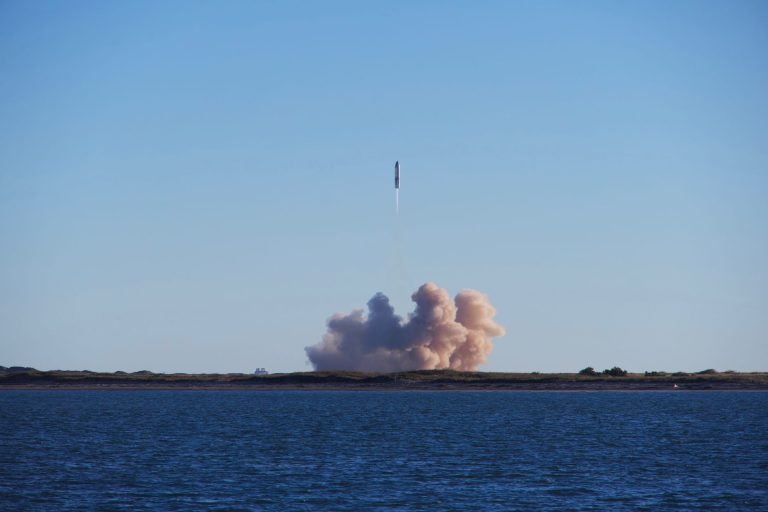
The high-bandwidth communications link established by Meridian Space is a groundbreaking achievement in orbit. This innovation promises to enhance connectivity and data transfer in space.
Overview of Meridian Space
Meridian Space, a pioneering company in satellite technology, has made significant strides in the realm of space communications. With a focus on enhancing connectivity, the firm has successfully established the first high-bandwidth communications link in orbit, marking a milestone in the industry.
This achievement underscores Meridian Space’s commitment to innovation and excellence. The company has invested heavily in research and development to ensure that its satellites can handle the increasing demands for data transmission and communication efficiency.
Some key features of Meridian Space include:
- Advanced Satellite Technology: Utilizing cutting-edge designs and materials to improve performance.
- Global Coverage: Providing seamless communication services across various geographical locations.
- Scalability: Ensuring that the network can grow in response to user needs and technological advancements.
As Meridian Space continues to innovate, its success in establishing high-bandwidth communications links in orbit sets the stage for a new era in satellite communications.
Importance of High-Bandwidth Links
High-bandwidth communications links play a crucial role in modern space missions, enabling efficient data transfer and enhancing overall mission success. The establishment of such links allows for the transmission of large volumes of data, including high-resolution imagery and scientific measurements, which are vital for research and operational purposes.
Key benefits of high-bandwidth communications links include:
- Increased Data Throughput: The ability to send and receive more information in real-time supports a wide range of scientific and operational activities.
- Enhanced Communication Reliability: These links improve the reliability of communications between spacecraft and ground stations, reducing the risk of data loss.
- Real-time Decision Making: High-bandwidth capabilities enable quicker analysis and responses to critical situations during missions.
As demonstrated by Meridian Space, the successful deployment of a high-bandwidth communications link in orbit signifies a major advancement in space technology, promising to revolutionize future explorations and satellite operations.
Technological Innovations in Space
Recent advancements in satellite technology have paved the way for improved high-bandwidth communications links in space, enabling unprecedented data transfer capabilities. Companies like Meridian Space are at the forefront of these innovations, utilizing cutting-edge techniques to enhance communication efficiency.
One of the most notable technological breakthroughs involves the integration of advanced modulation schemes and error correction algorithms. These improvements allow for more data to be transmitted over existing bandwidth, significantly increasing throughput without the need for additional satellites.
Moreover, the development of adaptive beamforming technologies has played a crucial role in optimizing signal quality. This innovation enables satellites to focus their transmissions more effectively, reducing interference and enhancing overall reliability.
As these high-bandwidth communications links become more reliable, they open doors to new applications in various sectors, including telecommunications, Earth observation, and even interplanetary exploration. The future of space communication is bright, with ongoing innovations promising to transform the way we connect across vast distances.
Future of Satellite Communications
The future of satellite communications is poised for significant advancements, largely driven by the establishment of a high-bandwidth communications link in orbit. This groundbreaking technology not only enhances data transmission rates but also ensures reliable connectivity for a variety of applications.
As we look ahead, several trends are likely to shape the landscape of satellite communications:
- Increased Demand: With the growing need for high-speed internet access globally, especially in remote areas, satellite systems will play a crucial role.
- Innovative Partnerships: Collaborations between private companies and governmental agencies will drive research and development, accelerating deployment.
- Next-Gen Satellites: The launch of advanced satellites equipped with high-bandwidth communications links will revolutionize capabilities, providing faster and more efficient services.
As Meridian Space leads the way, the potential for high-bandwidth communications links in orbit is set to transform industries, from telecommunications to scientific research, making global connectivity a reality.
Impact on Space Exploration
The establishment of the high-bandwidth communications link marks a significant milestone for space exploration. By enhancing data transfer rates between satellites and ground stations, this technology opens new avenues for scientific research and operational efficiency.
With improved communication capabilities, researchers can transmit large datasets collected from space missions in real-time, facilitating a quicker response to emerging challenges. This efficiency is particularly crucial for:
- Remote Sensing: High-resolution images and data can be sent back to Earth immediately, allowing for timely analysis.
- Telemedicine: Astronauts can receive immediate medical assistance through enhanced communication.
- Collaboration: Scientists worldwide can collaborate more effectively on space research projects.
Moreover, the success of this high-bandwidth communications link paves the way for future missions, potentially enabling the deployment of more sophisticated instruments and technology in orbit. As space exploration continues to advance, the importance of reliable and efficient communication cannot be overstated.
Challenges Ahead for Space Tech
As the space industry progresses, challenges remain for the implementation and optimization of high-bandwidth communications links. While recent successes have paved the way for improved data transfer capabilities, several obstacles lie ahead.
Key challenges include:
- Environmental Factors: Space conditions can affect the reliability of communications links, requiring robust technology to withstand harsh environments.
- Infrastructure Development: Expanding ground stations and satellite networks to support high-bandwidth communications necessitates significant investment and planning.
- Competition for Spectrum: As more entities launch satellites, the competition for radio frequencies intensifies, potentially leading to interference issues.
- Regulatory Hurdles: Navigating international regulations and gaining approval for new technologies can slow progress.
Despite these challenges, the potential benefits of establishing reliable high-bandwidth communications links in orbit are immense, promising advancements in various sectors beyond space exploration.
The successful deployment of the high-bandwidth communications link has revolutionized data transmission capabilities in space. As a result, researchers are now able to conduct more complex experiments using this high-bandwidth communications link to relay information back to Earth in real-time.
Photo by Brett Sayles on Pexels
References
Related stories
OPPO Watch 5: The Best Smartwatch with Proven Features · GTA 6 Online News: The Best Insights and Updates You Need · Vulcan Rocket launch failure: Major setback for Amazon Leo satellites
About the Author